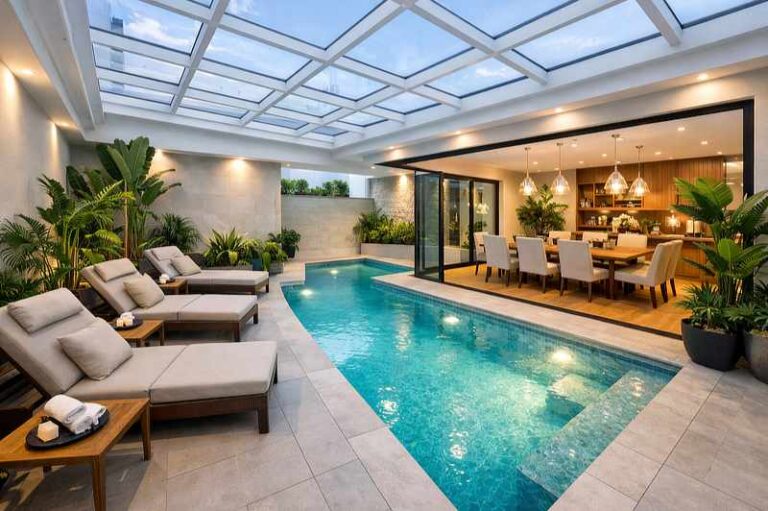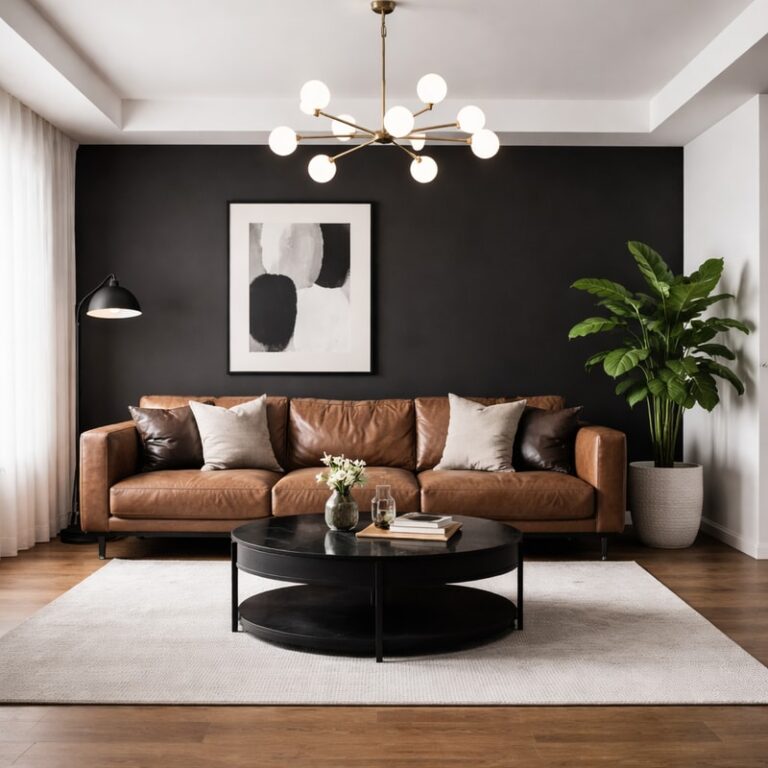
Minimalist rooftop garden ideas are no longer limited to trendy cafés—they are increasingly popular for modern homes.
A rooftop garden is a functional green space built on top of the house, designed to improve air quality, add natural beauty, and create a relaxing outdoor area for everyday living.
Its purpose is to produce cleaner air, add green space to your home, and provide a relaxing area for spending time with family.
In the morning, you can soak up the sun in your rooftop garden, and in the afternoon, enjoy the view of the sunset.
From your rooftop garden, you can also unwind at night while gazing at the stars and the moon.
Minimalist Rooftop Garden Design Ideas
Here are several minimalist rooftop garden designs you can take inspiration from:
1. Simple Rooftop Garden
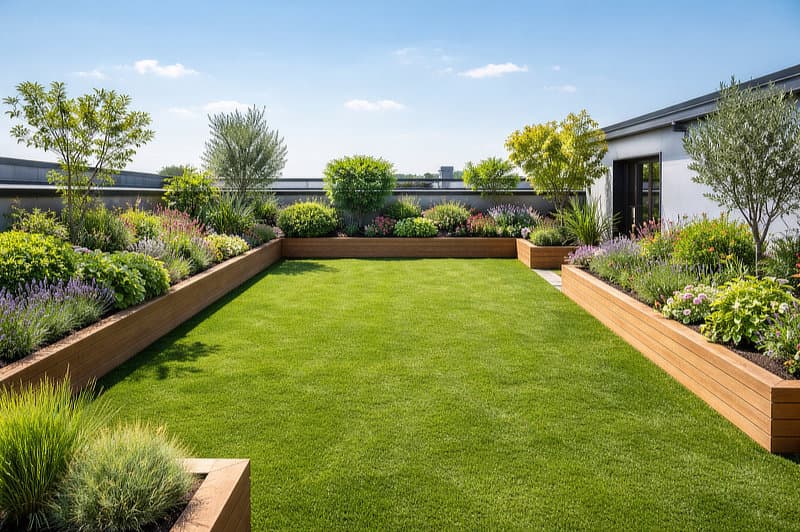
The first idea is a very simple rooftop garden design. This style is commonly found in homes across Europe.
The basic concept of a rooftop garden is to provide a green space on top of the house. Therefore, you don’t need to place any furniture here—just plant pots.
Use grass as the rooftop flooring and install planting beds or containers along the edges to hold the soil.
One important thing to note with this design is to reinforce the roof structure with additional layers so it can support the load and prevent water from seeping through.
2. Rooftop Garden with Wooden Accents
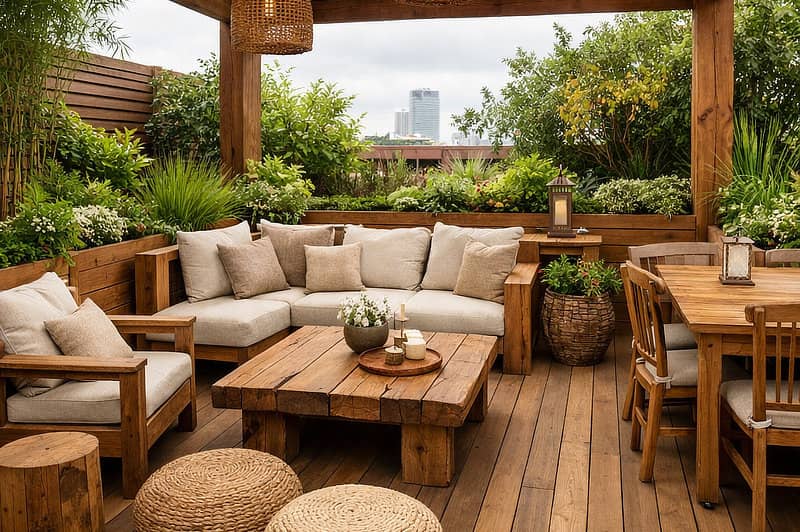
A rooftop garden with wooden elements creates a more natural, lush, and cozy atmosphere.
You can plant various types of greenery along the sides using long wooden planter boxes. To enhance the look, use furniture made from wood as well.
This wooden-themed design is considered semi-open, so during rain, the wooden flooring can be prone to damage.
To prevent this, apply a waterproof coating to the wooden floors and railings. If you want to keep rainwater out entirely, you can install an asbestos or similar roofing material above the area.
3. Open-Space Rooftop Garden
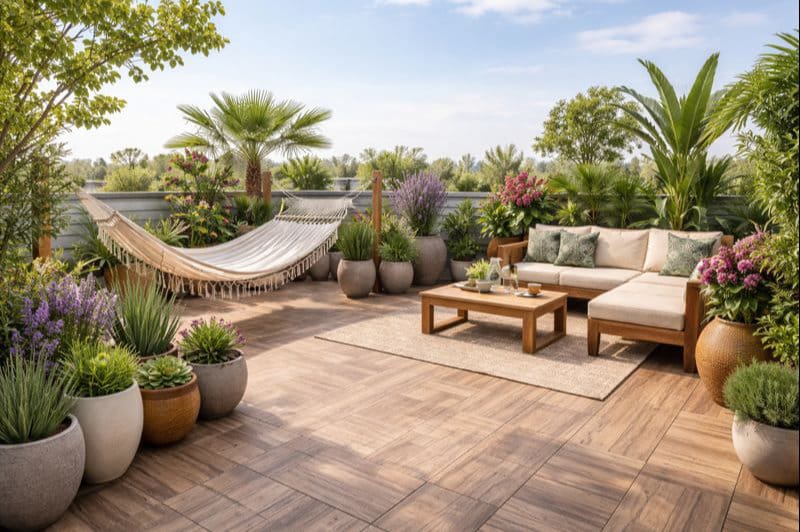
The third design idea is an open-space rooftop garden. This design is very simple and easy to apply to a minimalist home.
Use wood-patterned ceramic tiles for the flooring so it’s non-slip and resistant to heat. For planting, use pots in various shapes and sizes.
Don’t forget to place saucers or trays under the pots to prevent water from seeping directly onto the floor when watering plants.
For extra comfort, add a hammock for lounging or use patio chairs or wooden benches.
Just like the wooden-accent design, the downside of this style is that rainwater can easily pool, so proper drainage installation is essential.
4. Bohemian-Style Rooftop Garden
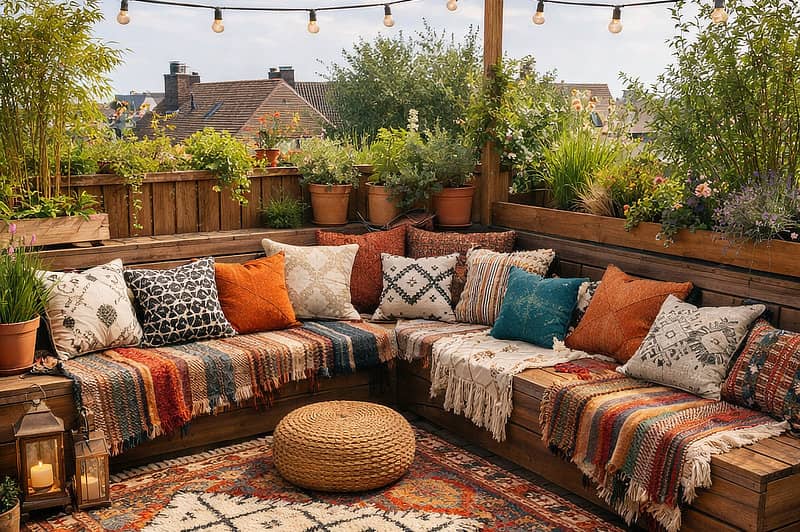
The bohemian theme is very popular among young people because it looks highly Instagrammable in photos.
A bohemian rooftop garden uses wood materials for the flooring, railings, and seating benches. You can plant greenery along the perimeter of the rooftop garden.
On the benches, add several throw pillows to increase comfort while relaxing in the space.
Use a parasol or transparent asbestos roofing to protect against direct sunlight and rain. Complete the look with bohemian-style blankets and rugs for a more artistic touch.
5. Industrial-Themed Rooftop Garden
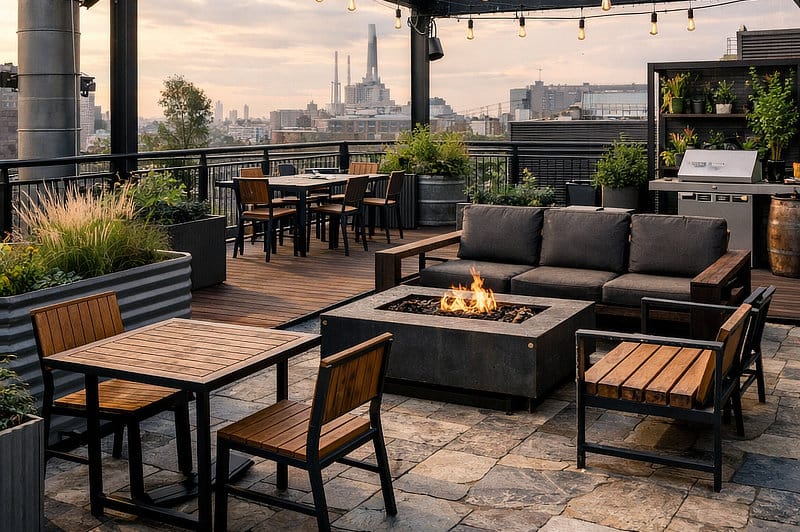
If your home has an industrial or masculine theme, this rooftop garden design is worth considering.
Unlike the previous designs, this rooftop garden mainly uses metal materials. The railings are made of iron, while the flooring can be stone-patterned tiles or wooden decking.
The best planting media for an industrial-style rooftop garden is potted plants—either clay pots or plastic pots work well.
For furniture, combine wood and metal elements. For example, use wooden chairs paired with metal tables, or vice versa.
This combination allows the natural and industrial elements to blend beautifully.
6. Modern-Style Rooftop Garden
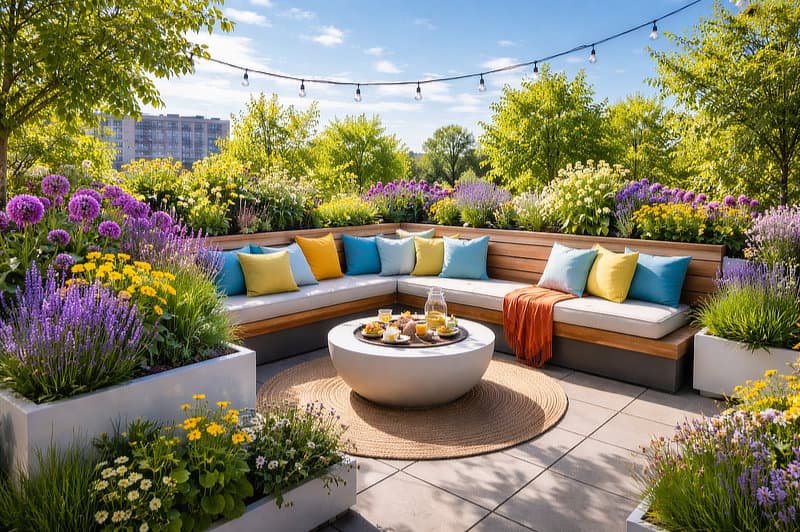
This rooftop garden features a bright, cheerful color palette with colorful flowers in shades of purple, yellow, and fresh green.
The seating area is designed with built-in wooden benches, complemented by blue and yellow cushions and an orange throw blanket for a warm touch.
If you want to follow this inspiration, it’s best to stick closely to the color scheme shown in the design, as different colors may create a noticeably different atmosphere.
7. Minimalist and Natural Rooftop Garden
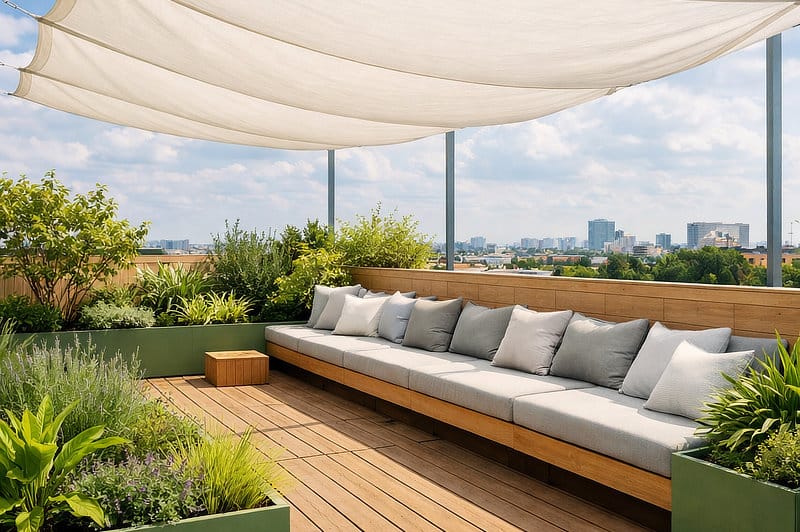
This rooftop garden adopts a minimalist design with wooden flooring and green planter boxes filled with lush plants.
There is a long built-in bench along one side, which saves space and keeps the rooftop area uncluttered. A white fabric canopy is added as a complement to block direct sunlight and create a more comfortable environment.
Tips for Designing a Rooftop Garden
Interesting, right? Before building a rooftop garden in your home, it’s best to consider the following tips:
1. Ensure the Roof Structure Is Strong
According to House and Garden, the roof structure and construction must be strong. Calculate the building’s load capacity and choose lightweight substrates such as LECA (Lightweight Expanded Clay Aggregate).
Select high-quality planter materials, such as 3mm galvanized steel that is rust-resistant, with smooth finishing so the focus remains on the plants rather than the pots.
The roof must be able to support the weight of plants, soil, water, as well as furniture that will be placed on it.
2. Choose the Right, Non-Glare Flooring
Selecting the right, non-glare flooring is also important. Rooftops typically use suspended flooring systems that allow water to drain through.
Materials like ceramic or porcelain tiles with neutral colors reflect less light. As an alternative, high-quality composite decking boards can provide a natural look and long-lasting durability.
3. Install Proper Water Drainage
In addition to roof structure and construction, proper water drainage installation is crucial. Even if you use potted plants, good drainage is necessary to prevent water from pooling during heavy rain.
Also, make sure there is access to clean water or a faucet for watering the plants.
4. Apply Waterproofing Layers
To prevent water from seeping into the rooms below, apply waterproofing materials to the roof. With proper waterproofing, the space beneath the roof will be protected from moisture and dampness.
The waterproofing process involves several layers, including vapor control, thermal insulation, support panels, and more.
Although it may seem complicated, this process is essential to ensure your rooftop garden lasts longer and doesn’t deteriorate easily.
5. Use Weather-Resistant Furniture
To enhance the appearance of your rooftop garden, add furniture such as chairs and tables for relaxation. Choose furniture that is resistant to water and heat so it can withstand sun and rain.
If the furniture is not weather-resistant, it’s best to place it under a canopy.
5. Choose the Right Growing Medium
Choosing the right planting medium is important so your plants can grow well. Most people use red soil and humus, but make sure the soil has a pH level of around 5–7.
You can also use coconut fiber, rice husks, or burned rice husks. When selecting planting media, adjust it to the type of plants you plan to grow on your rooftop garden.
6. Adjust to Your Budget
Last but not least, tailor your rooftop garden project to your available budget.
It’s advisable to consult with an architect and contractor beforehand to plan the design and calculate the estimated costs involved.
So, what do you think after seeing these rooftop garden design ideas? Is there one that suits your taste?